From a Production Problem to an Automated Wood-Chips Handling Solution
Sometimes, the machine you need is not the machine you originally planned to buy — it is the solution to a problem that appeared as your production grew.
This project started with a call from a sawmill in Estonia.
As our client increased production, the amount of wood chips and by-product material generated by the sawmill increased significantly as well.
What was previously manageable soon became a real operational problem.
The wood chips were accumulating faster than they could be handled, eventually forming large piles around the production area. Loading this material into trucks became increasingly difficult, inefficient, and time-consuming.
So, we started where every good engineering project should start: at the client’s site.
Our team visited the facility to understand the problem in its real operating environment.
We studied:
- The existing production workflow
- Material accumulation and discharge points
- Available space and site constraints
- Material flow and handling requirements
- Loading and transportation operations
- The client’s production targets and future needs
We didn’t simply ask, “What machine should we install?”
We asked:
“How can we make this entire material-handling process easier, more reliable, and less dependent on manual intervention?”
From site visit → engineering study → solution
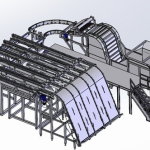
Back at our engineering office, we analyzed the collected information and developed a compact automated material-handling concept.
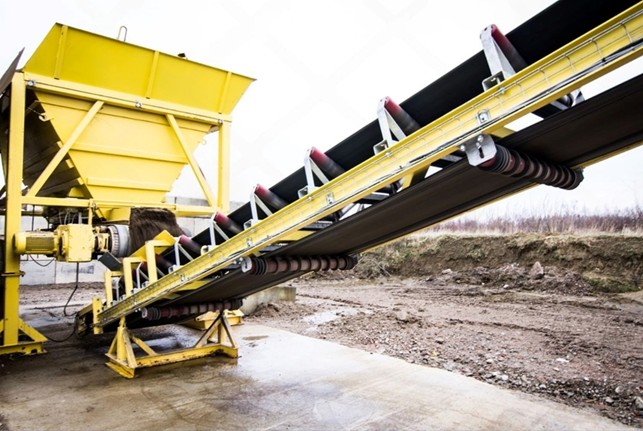
The proposed solution consisted of an integrated system including:
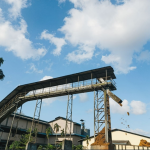
Hopper → Conveyor → Controlled/Dosing System → Continuous Discharge
The idea was simple but powerful:
Instead of allowing wood chips to continuously accumulate and become another problem for the production team, the system would receive, regulate, convey, and discharge the material automatically.
The result was more than just a conveyor.
It was a solution designed around the client’s actual production process.
And the most important part?
The client didn’t just receive a machine.
They received peace of mind.
Less material accumulation.
Less manual handling.
Easier truck loading.
A cleaner workflow.
And, most importantly, a system capable of supporting increased production.
Today, the equipment is still standing and operating in Estonia, doing exactly what it was engineered to do.
This is how we approach engineering projects.
Listen → Visit → Understand → Study → Design → Build → Deliver
Because for us, machine building doesn’t start with steel.
It starts with understanding the client’s problem.
And the best engineering solution is not necessarily the most complicated one.
It is the one that solves the real problem.
From production challenges to engineered solutions.